
How to Make Anyone Look Like a Hero | Camera Angles Explained
Learn how camera angles shape power, dominance, and emotion in visual storytelling. Discover how low and high angles turn ordinary shots into cinematic moments.
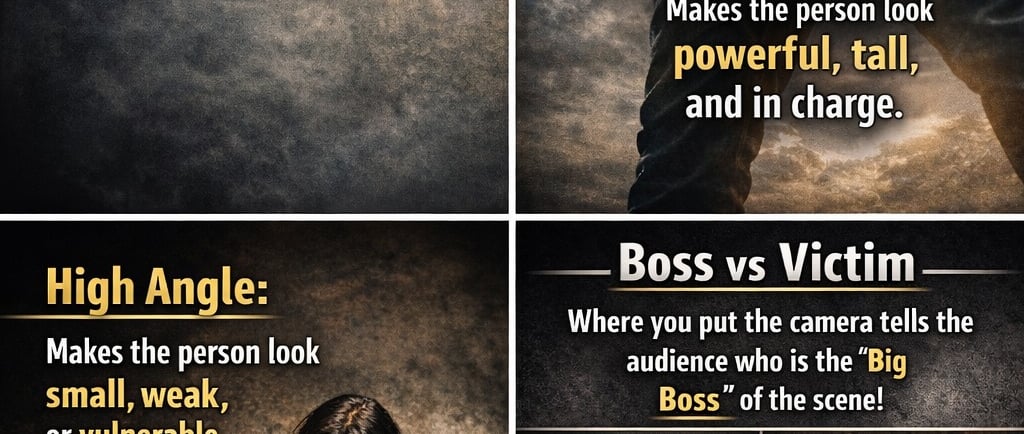
Introduction: Why Heroes Are Made, Not Born
Great visual storytelling doesn’t rely on expensive cameras or big budgets.
It relies on choice, especially one powerful choice most people overlook:
Where you place the camera.
The same person, in the same location, wearing the same clothes, can look like:
a leader
a victim
a hero
or someone powerless
All by changing camera angle.
This is the invisible language of cinema, and once you see it, you can’t unsee it.
The Psychology Behind Camera Angles
Humans are wired to read power visually.
From childhood, we associate:
Looking up → authority, strength, dominance
Looking down → vulnerability, submission, weakness
Filmmakers exploit this instinct constantly.
Camera placement silently tells the audience who matters in the scene.
Low Angle Shots: Creating Power and Dominance
What is a Low Angle Shot?
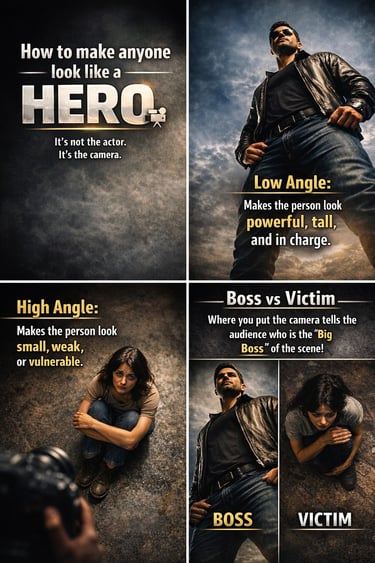
A low angle shot places the camera below eye level, often near the floor, tilted upward toward the subject.
What It Communicates
Power
Confidence
Authority
Control
The subject appears:
Taller
Larger than life
Emotionally dominant
Even ordinary people look heroic when filmed from below.
Where You See It Used
Leaders entering a room
Heroes delivering final dialogue
Villains asserting dominance
Athletes during victory moments
👉 Low angle = “This person owns the scene.”
High Angle Shots: Showing Vulnerability and Weakness
What is a High Angle Shot?
A high angle shot places the camera above the subject, looking down on them.
What It Communicates
Weakness
Fear
Isolation
Loss of control
The subject appears:
Smaller
Overpowered by their surroundings
Emotionally exposed
Where You See It Used
Characters facing defeat
Moments of emotional breakdown
Victims being overwhelmed
Realizations of failure
👉 High angle = “This person is losing power.”
The Boss vs. Victim Effect (Same Scene, Different Story)
Here’s the cinematic trick most beginners miss:
The camera decides who the boss is—not the script.
In the same scene:
Film Character A from a low angle
Film Character B from a high angle
Instantly:
One feels dominant
The other feels submissive
No dialogue required.
No explanation needed.
The audience feels it subconsciously.
This is why camera placement is storytelling, not just framing.
Why This Matters (Even Outside Films)
This principle applies everywhere:
Brand videos
Interviews
Ads
Product shoots
Reels and short-form content
Want a founder to look confident?
Shoot slightly low.
Want authenticity or vulnerability?
Shoot slightly high or eye-level.
Your camera angle is your narrator.
Final Takeaway: Simple. Powerful. Cinematic.
You don’t need:
More gear
More lighting
More editing
You need intentional camera placement.
📷 Low camera → power, dominance
📷 High camera → weakness, vulnerability
Camera placement tells the audience:
Who’s in control of the scene.
Once you understand this, every shot becomes a storytelling decision.


Quick Links
Home
EPR Management
Copyright © 2026 Tinnu International Ltd. All Rights Reserved. Designed and maintained by Tinnu International Ltd.